
Inside the "Ghost in the Machine" Release
Filmmaker Valerie Veatch on distribution windows, community screenings, and reframing what she's actually selling.

Ghost in the Machine, which premiered at Sundance earlier this year, is already running a release with so many simultaneous windows that even I, a person who openly does not believe in fixed windows, raised my brows in intrigue.
Here’s Ghost in the Machine’s current ‘distribution stack:’
Film festivals
US theatrical
UK theatrical
Community screenings (global: in-person, virtual, on-demand)
University / educational screenings (global: in-person, virtual, on-demand)
TVOD ($20 rentals)
And there’s a PBS deal announced for the fall.
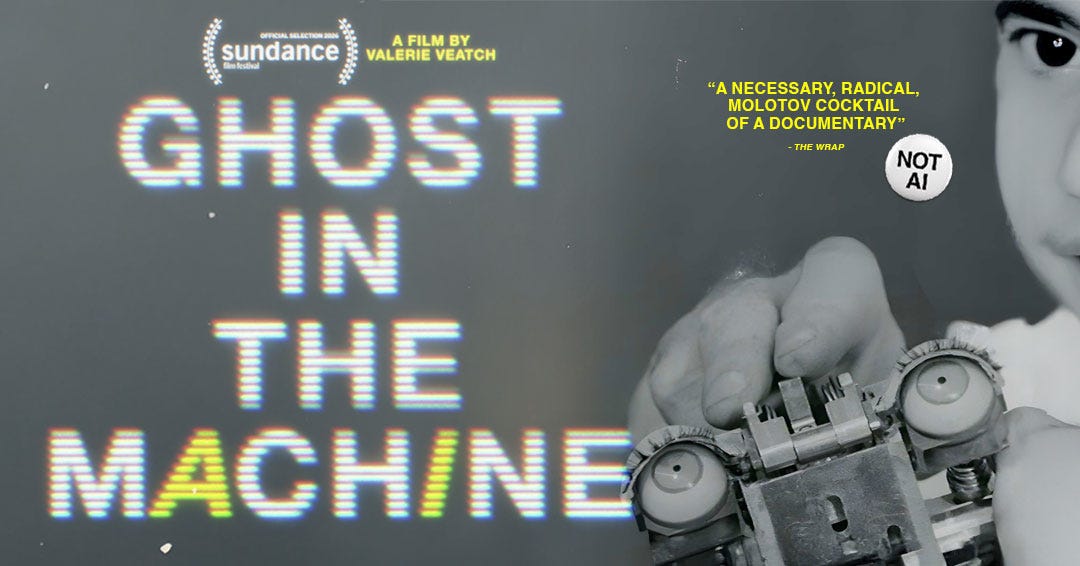
It’s the lack of any sequencing here that was a medium-sized shock to my system. My first question to filmmaker Valerie Veatch was, “Explain yourself!” Spoiler: she did. We talked strategy, cannibalization, and how she’s keeping everyone (especially herself) happy.
Kinema for Filmmakers is a newsletter about creative film distribution. This is a filmmaker case study.
Distribution Timeline
January 2026: Sundance premiere
March 2026: Day and date release
US theatrical (select art house theaters)
TVOD $20 rentals (Kinema)
UK theatrical began around this time as well (including an extended 3 week run at the Curzon in London, and a sold out opening weekend)
March 2026 - present: Community and university screenings (Kinema)
June 2026: Full UK theatrical release (opening in 5 cities, adding more)
September 2026: Broadcast (PBS Independent Lens)
Future: on-going community screenings (Kinema)
Lightbulb
Ghost in the Machine unveils the nefarious history of artificial intelligence and questions its ‘inevitability.’ As Valerie put it, “It’s not messing around in its perspective or its call to action.” As she was applying to film festivals and considering her distribution options, she articulated three truths for herself:
On industry: There are no deals to be had in general.
On politics: Any deals are extra-unrealistic for Ghost in the Machine, a film that is very much speaking truth to power.
On urgency: The conversation about AI is happening now. There is no value to be had in waiting.
Despite holding these truths, the path forward wasn’t clear, but she didn’t need answers yet. She had a world premiere to enjoy.
On Valerie’s Sundance docket, in addition to premiering Ghost in the Machine, was appearing on a Solidarity House panel, moderated by Emily Best. The panel, titled “Who Stewards the Future: Artists, Audiences, and the Fight for Agency,” took a hard look at our role and responsibility as humans steering AI and technology more broadly.
It was on this panel that Valerie began to rethink Ghost in the Machine’s release, in part due to Kinema’s CEO, Christie Marchese. “Christie spoke with sincere authority around the role of community screenings and audience development. And the lightbulb went off for me.”
Valerie’s intention with this project has always been narrative intervention. That impact goal requires people to engage with the subject matter together. Before that moment, Valerie thought of Kinema as, “a thing you do when you don’t have distribution. The stigma was in my own brain. It was my own misunderstanding of things.” There was (and still is) a worldwide AI conversation taking place. It cannot only be shaped by the people selling it to us. Ghost in the Machine needed to be inside that conversation. Community screenings were (and still are) the point.
Simultaneous Windows
So about those windows. Valerie had a clearly articulated goal that she was working towards (impact: narrative change), which made every subsequent decision easier. She wanted people watching the film and talking together about the facts and ideas presented. The traditional logic around sequencing and protecting windows didn’t advance that goal.
Here’s a snapshot of Ghost in the Machine screening events, just 6 months into its release:
20 festivals (including the Sundance premiere)
10 theaters across the US and UK, typically in 1-4 night runs (with a notable 3-week extended run at the Curzon in London)
60+ community screenings booked via Kinema by universities, AI interest groups, reading groups, and community organizations
There were five tenets that especially shaped her decision-making:
1. Reject fear of cannibalization
“Customers have preferences and they’re going to do their thing. The fear is always cannibalization. But actually, more is more.” On this topic, there were two scenarios she teased out:
Why would a theater say yes to screening Ghost in the Machine when it is already available for rentals?
Because the programmers had heard about the film
Because AI is a topic people want to talk about in person
Because Valerie came to theaters prepared with a press kit, a poster, and zero demands about ticket splits
Why wouldn’t institutions or educators just rent the film for $20 to show to their members or classrooms instead of paying the licensing fee?
If they do, Valerie is unbothered: “I hope they do. I’m already going to be on PBS documentaries YouTube for free starting in September. Every single teacher will be ripping this in their class. That’s the whole point.”
But also, there’s alternate positioning here: “The way to approach the educational space is to reframe what you’re selling. It’s not access to a streaming link. You are selling the public performance rights and the ability to host an AI event on your campus. Once I was able to communicate that, the whole conversation went easier.”
2. Stay organized
Valerie’s outreach process was codified and her materials were easy to navigate. They included:
A template email, sent to every indie theater she could find
A Google Sheet to track responses and bookings
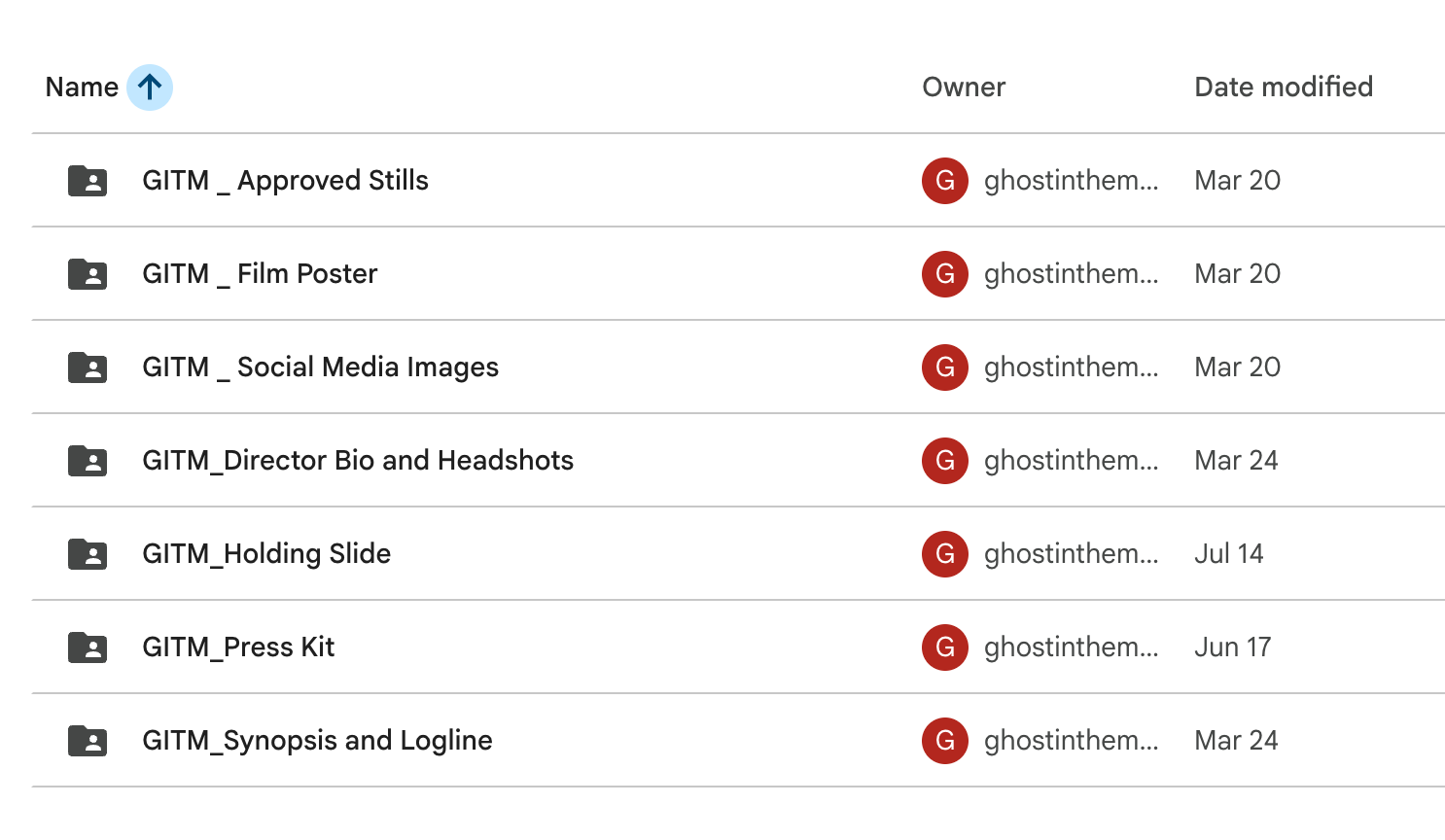
A Google Drive folder with everything a theater could ever need: “Having a folder structure with the poster, hi-res images, bios, press kit — it’s not novel, but to me it’s amazing. When anyone’s like ‘do you have a bio?’ you’re like, here’s everything you possibly need.”
3. Be flexible
Because Valerie was prioritizing narrative change / reach, she was happy to accept whatever terms the theaters offer. “I will always agree to whatever the theater says. I’m just like ‘thank you for playing the film. This is amazing.’”
4. Accept most screening requests
When people reach out wanting to book a screening, Valerie almost always said yes. “We had a fire hose of universities and communities, AI interest groups, reading groups reaching out to us wanting to book a screening of the film. It was amazing to just have Kinema set up.” The tooling made it possible to scale up screenings with a lean team and, as a result, the size of the audience didn’t matter. “Kinema allows us to connect to groups of 25 people in New Zealand. It’s very easy to be quickly involved in a way that is useful for them and for you. That is so rich.”
Valerie has a part-time team helping her do this work:
Lucy Reynolds: associate producer, working daily alongside Valerie
Norman Slate: associate producer handling social, website, and tech on virtual event panels
Nora Poggi: impact producer
Collectively they view every event as an impact event. “All of those screenings, we treat as if they are impact engagements or community engagements. Because it’s the meta politics of film. It’s a screening, but it’s also an opportunity to get people together.”
5. Hold on screenings strategically
Valerie does apply some windowing logic in service of the film’s mission. If a festival for example is mission-aligned then it makes sense to Valerie to hold the film back from that market and work with the festival to make a greater splash. “We are holding off on Zurich because we’re gonna be at the Zurich Film Festival in the fall, which is cool. It is a film festival that wants to be part of the conversation. It has found meaning in this film and wants to center it.”
NOT AI Buttons
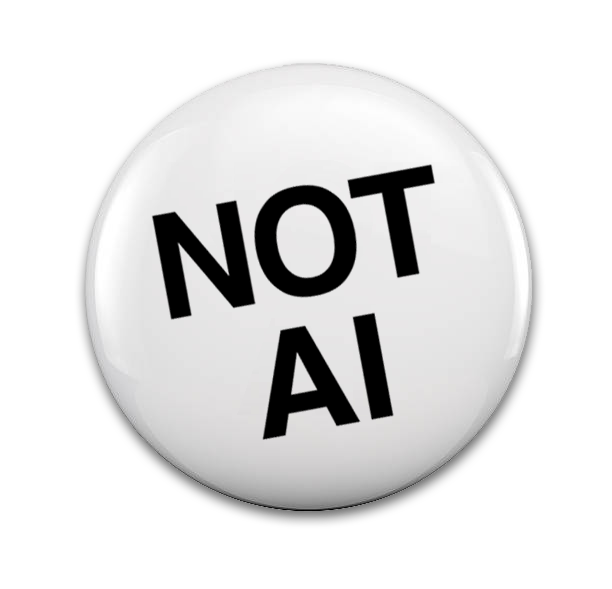
Throughout the film, Valerie labels what is AI-generated and what isn’t. “Initially it was just going to be that whatever was not AI gets labeled ‘NOT AI.’ But then I had to label the AI too so that it really made sense.”
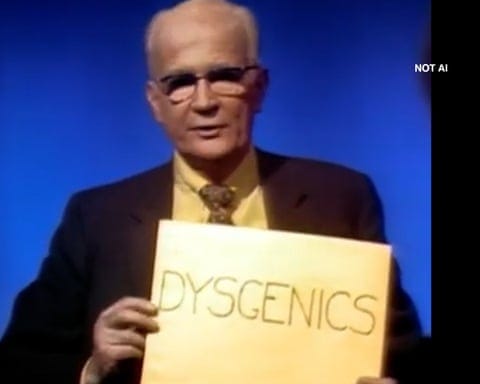
‘NOT AI’ started to take on a life of its own. It became a kind of slogan that Valerie used to make buttons. Physical, wearable, pin-it-to-your-festival-badge buttons. “‘NOT AI’ can take on different meanings but it’s very blunt.” Valerie handed the buttons out at Sundance and they’ve traveled to many screenings since.
A small freebie is one way to make a screening event feel special and it offers people a way to carry the film with them and share the movement. By wearing the ‘NOT AI’ button, audiences got the immediate satisfaction of both being on the inside of something and taking a stand. They too are moving the ‘narrative change’ needle.
PBS
Valerie didn’t pitch Independent Lens. She did do an interview for the podcast Doc Talk and the conversation spurred Noland Walker of ITVS to reach out. “I was honestly shocked because I thought we were going to do a full self-release. But obviously it really helps to have the context that PBS brings to storytelling.” The right people will find you when you are working out loud.
She had already planned to do the day and date release, in theaters and on Kinema, when PBS came along. Valerie was transparent about that. “Initially they were a little bit nervous about me having this kind of pre-release of the film ahead of what would have normally been a summer festival run.” But over time, aided by a growing calendar of screening events and activity on social platforms, those nerves have shifted. “Now PBS is very excited. It’s been really thrilling for us all to see how audience development and Kinema work so well together.”
Next Up
The next phase of Ghost in the Machine’s release includes an impact campaign in the US and Europe, timed to lead into the PBS broadcast in September. The focus is on cities where conversations about AI’s local impact are already happening. Buttons will be drop-shipped to many locations.
Valerie describes September as “the culmination.” It will be the end of a few of the concurrent release windows for Ghost in the Machine and it will also be the largest audience moment of the whole run. There’s been such intentionality put towards getting the film seen and it’s actually not dissimilar from the intentionality given to making the film itself. As Valerie reflected, “I'm nobody, and I don't mean this in any way, but I hope that something like what ‘Ghost in the Machine’ is doing shows other filmmakers that there is actually a way to have a lot of creativity and ownership in how your film is distributed.”
Host a screening of “Ghost in the Machine” or rent it on Kinema. And check out the film’s website for upcoming in-person screenings.
This is super fascinating and impressive! Thank you, Valerie, for your willingness to share and to Ami for a clear write-up. My one wonder is about the willingness to forgo revenue (no theatrical split, being ok with free screenings, etc) and if there is other income (like maybe grants and donations) supporting that work, or other monetization plans down the line. I'd love to see a future in which films are both/and (impact/revenue) as much as possible!
Brava!! Bold and beautiful.