
Distribution Starts at the Script Stage | Jon Reiss (8 Above)
"Every film and filmmaker is different and hence every film needs a unique distribution and marketing strategy."
Listen now on YouTube, Apple, or Spotify.
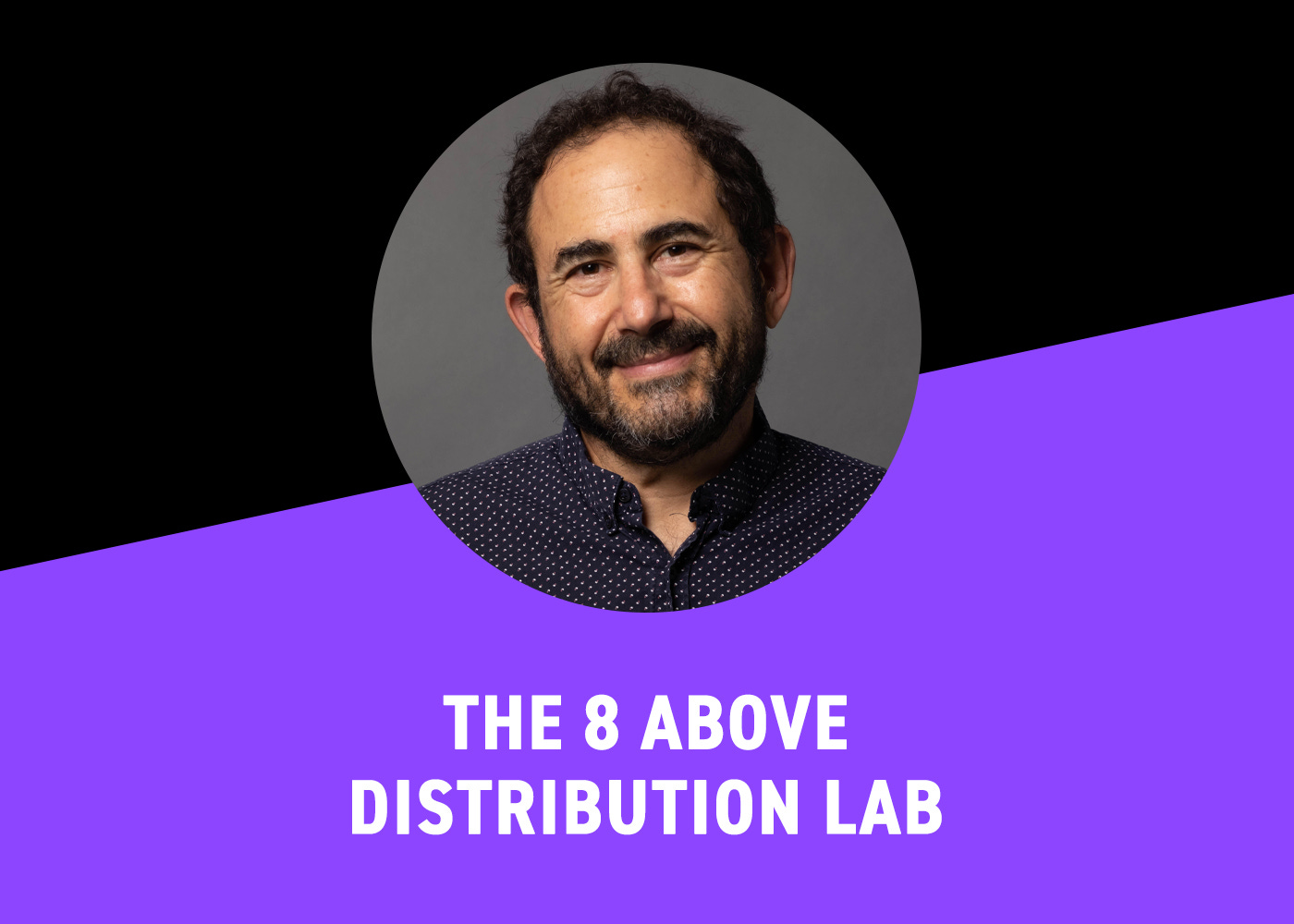
40+ episodes in and we have our first ever second-time-guest, Jon Reiss-8Above. He’s the founder and president of 8 Above, a boutique theatrical distribution and strategy company. He coined the term PMD, Producer of Marketing and Distribution, in his book Think Outside the Box Office and has been working in direct / hybrid / independent distribution since the ‘80s, when he booked his documentary team on six screening tours in Europe as if they were a band. He launched his Substack, Jon Reiss-8Above and the 8 Above Distribution Lab about two and a half years ago. He speaks with us today about opening his next cohort of that Lab. He is also a co-founder and the board chair of the Future Film Coalition, a nonprofit advocating for the economic sustainability of independent film at the local, state, and national levels.
In our conversation, we discuss:
The four questions every filmmaker needs to answer about their audience
How the distribution lab works and who it’s designed for
Three more info sessions: https://8above.com/distribution-lab/
Windowing strategy
What value you’re providing your audience (it can’t only be your film)
The three Future Film Coalition campaigns that are in motion
And more!
Kinema for Filmmakers is a newsletter about creative film distribution. This is a recap of our latest podcast episode.
Key Takeaways:
The fundamentals that make up your film distribution strategy:
“The basic principles of strategy kind of evolve more slowly because they involve fundamentals which is: what is the goal, what’s the film, what’s the brand of the film, what’s the brand of the filmmaking team, how do those relate to each other, who’s the audience, how are you going to reach that audience... and then what’s the different distribution paths that are possible for that particular film?”
“If you have limited resources, how do you allocate them to do your best job reaching the goal?”
Every film needs its own strategy.
“Our fundamental philosophy is that every film and filmmaker is different and hence every film needs a unique distribution and marketing strategy.”
“Everything we do is bespoke. Everything’s unique for each different film…we don’t have a cookie cutter approach. We don’t have like a model that we push films into.”
Your windowing strategy should follow your goal.
On The Librarians: “[the filmmaker] is still on his two-year, what I call an event theatrical release, which is festivals, theatrical, and community screenings, and educational screenings. And he’s still doing some theaters.”
On Ghost in the Machine: “They just blew up all the windows... ‘[The Librarians]’ has a very deliberate goal of audience in person. Period. The end. That’s his goal. And Ghost of the Machine has a very mission-driven narrative change. And this is now and has to happen now. We have to get the word out now. So we’re just going to forget all those windows.”
“You can have very deliberate windows and you can not.”
Most filmmakers don’t think about the fourth audience question.
The four questions:
Who is your audience?
How do you reach that audience? (marketing)
How does that audience consume media? (distribution)
And then the one most skip: What value do you provide that audience?
“Most filmmakers think, oh, I’m providing a film. But in this day and age with so much content out there, you can’t just be providing a film. You have to be providing more.”
“They want to know that authenticity from you and that’s a way to engage people. You don’t have to worry about creating all kinds of content because you can just talk about your experience and your passion and people want to connect with that.”
Distribution thinking begins at inception.
Own this: “Filmmakers are finally getting that they need to own this and that they need to start as early as possible and that many of them are realizing that they need to start at inception.”
Start while scripting: “In the last distribution lab, six of the fiction projects were at the script stage, which I never imagined that the lab would do that.”
It is creative work: “One guy just finished shooting and he said, ‘Oh my god, it changed my whole way of shooting and conceptualizing the content that I’m creating.’”
Find the medium you enjoy.
“I always tell people do what you enjoy. Find something that you enjoy because that’s what’s going to make you want to continue it. If it’s a burden and it feels terrible, you’re not going to keep on doing it.”
Corrollary: “Either find what feels good to you or find someone who can help you with it.”
“I stopped my own personal social media like almost a year and a half ago and that’s when I said I’m putting my time into Substack because that’s much more substantial and it’s going to mean a lot more for my audience than just posting pictures of my dogs and myself at panels.”
Jon’s origin story:
“I never really felt like it was a golden age of streaming. I think it helped 5% of filmmakers and there’s still 95% of filmmakers that didn’t benefit from that golden age.”
When that collapsed: “There was such a need for filmmakers to be helped in this space and that’s when I decided to kind of double down.”
The distribution lab is a mindset shift, not just a project plan.
“What the participants have said is it’s essentially a mindset shift, not just about distribution and marketing but also about filmmaking.”
“You’re learning tools that you’re going to take through your whole career for at least the next 10 to 20 years. It’s not just project focused. It’s more career focused.”
“Distribution and marketing can be a very lonely process even if you have a few people that you’re working with. And so one of the best benefits that people have said is that they’re working with a cohort of other people.”
The Future Film Coalition is trying to do something that hasn’t existed since AIVF.
“That’s a new nonprofit that is designed to advocate for the economic sustainability of independent film on the local, state, national level. On the policy, regulatory, judicial, and legislative sphere.”
“I like to think that we wouldn’t be in such a state that we’re in had it existed.”
Work already underway includes leading the movement to Block the Merger between Warners and Paramount, involvement in the national film fund conversation, and a multi-year economic impact study designed to give state legislators concrete data on: “independent film contributes this much to the Michigan economy. And so there should be a tax credit or we should help independent film function in our economy here.”
Where to Find Jon:
Website: 8above.com
Substack: 8 Above with Jon Reiss
Future Film Coalition: futurefilmcoalition.org
In this episode, we cover:
(0:11) Introduction to Jon and 8 Above
(4:32) Jon’s personal experience distributing two films with two different distributors
(5:27) The golden age of streaming
(7:50) Case study: The Librarians
(9:02) The fundamentals of distribution strategy
(10:10) Windowing strategy
(12:54) The four audience questions
(14:05) Building audience
(17:09) The 411 on The Distribution Lab
(23:06) The Future Film Coalition
(24:36) Where to find 8 Above and the Future Film Coalition
Referenced:
Jon’s first appearance on the Kinema pod:

Jon’s global graffiti doc: https://bombit-themovie.com/
The Librarians:

Fandom expert: Ivan Askwith
Letterboxd campaign: https://deadline.com/2026/05/letterboxd-for-sale-1236921783/
If you’re finding this newsletter valuable, share it with a friend, and consider subscribing if you haven’t already.